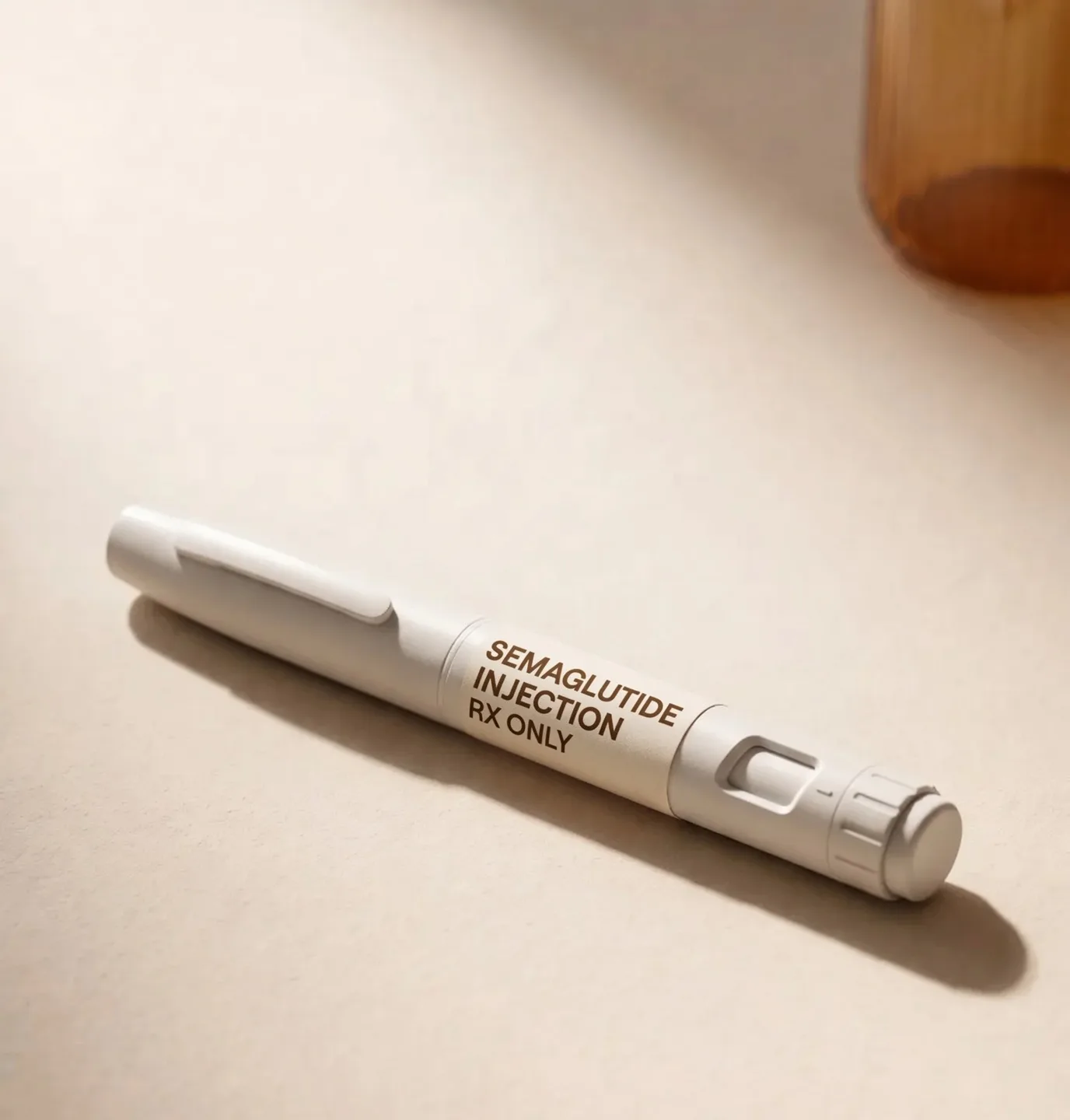
Once a week.
Clinician-titrated.
Compounded semaglutide with B12 — a prescription GLP-1 receptor agonist prepared under Section 503A — in a once-weekly injection a licensed clinician titrates to how you respond.
Compounded by a state-licensed 503A pharmacy from a patient-specific prescription. Not FDA-approved.Prescribed only when clinically appropriate, at a licensed provider's discretion. Available nationwide by telehealth — see our States page for current coverage. Not sure it's the right GLP-1 for you? Compare weight-loss programs →
Less willpower. More result.

GLP-1 acts on appetite signaling — typically the first thing to change, often within the first few weeks, before the scale moves.

Steady, sustainable loss month over month, with the dose titrated so it keeps working without wrecking your week.

Energy and mood lift as the weight comes off and the healthy habits stop feeling like a second job.
How semaglutide actually works.
Plain answers to what your clinician will cover, no forum myths.
What is semaglutide?+
A GLP-1 receptor agonist — it mimics a natural gut hormone that regulates appetite and blood sugar. LodeRx uses compounded semaglutide with B12, prepared by state-licensed US pharmacies under Section 503A of the FD&C Act and prescribed by a clinician when appropriate. Compounded medications are not FDA-approved.
How does it help me lose weight?+
It slows how fast your stomach empties and signals fullness to your brain, so you eat less without fighting constant hunger. Your dose steps up slowly over weeks — that ramp is managed by your clinician, not left to guesswork.
Why is B12 in it?+
The compounded formulation pairs semaglutide with vitamin B12, commonly used in compounding to support the formulation. Your clinician covers exactly what's in your prescription before you start.
Is it right for me?+
GLP-1 therapy is typically for adults with a qualifying BMI or a weight-related condition — your clinician decides from your history. It isn't for everyone: a personal or family history of medullary thyroid carcinoma, MEN 2, pancreatitis, or pregnancy are among the reasons it may not be appropriate.
What about side effects?+
The most common are gastrointestinal — nausea, constipation, reflux — mostly while the dose ramps. For most people they ease with time and titration. Your clinician adjusts the ramp if it's rough; that's what the check-ins are for.
Three steps to a quieter appetite.
Choose your plan and complete a short medical intake — history, weight goals, any conditions. Prefer to talk first? Request a call.
A provider licensed in your state reviews your file and decides if semaglutide is appropriate. If it isn't, you get a straight answer, not a workaround.
Medication arrives from a certified US pharmacy with syringes included. Your care team guides the weekly ramp and check-ins.
Asked constantly. Answered honestly.
Why is compounded semaglutide priced differently from FDA-approved GLP-1 medications?+
They are different products. Compounded semaglutide is prepared by a state-licensed 503A pharmacy for one patient from a clinician's prescription. It is not FDA-approved and is not a generic or a substitute for an FDA-approved drug. Your clinician decides whether it is appropriate for you; our price covers the consultation, medication, and shipping.
Do I have to inject myself?+
Yes — once a week, with a small insulin-gauge needle. Your care team walks you through the first one. If needles are a hard no, look at the oral tablet version instead.
How fast will I see results?+
Everyone responds differently; your clinician reviews your progress at each check-in and adjusts the dose as it titrates. Steady beats dramatic — and it's easier to maintain.
Can I use HSA/FSA, and can I stop?+
Many members use HSA/FSA funds — check your plan. No contracts; cancel before your next renewal. If you stop, your clinician advises on maintenance and what to expect.
Deals, new science, and new programs.
Join the list for member pricing, the latest research on hormones and longevity, and first access to new programs.